
Dog separation anxiety: how owners can help
Dog separation anxiety: how owners can help
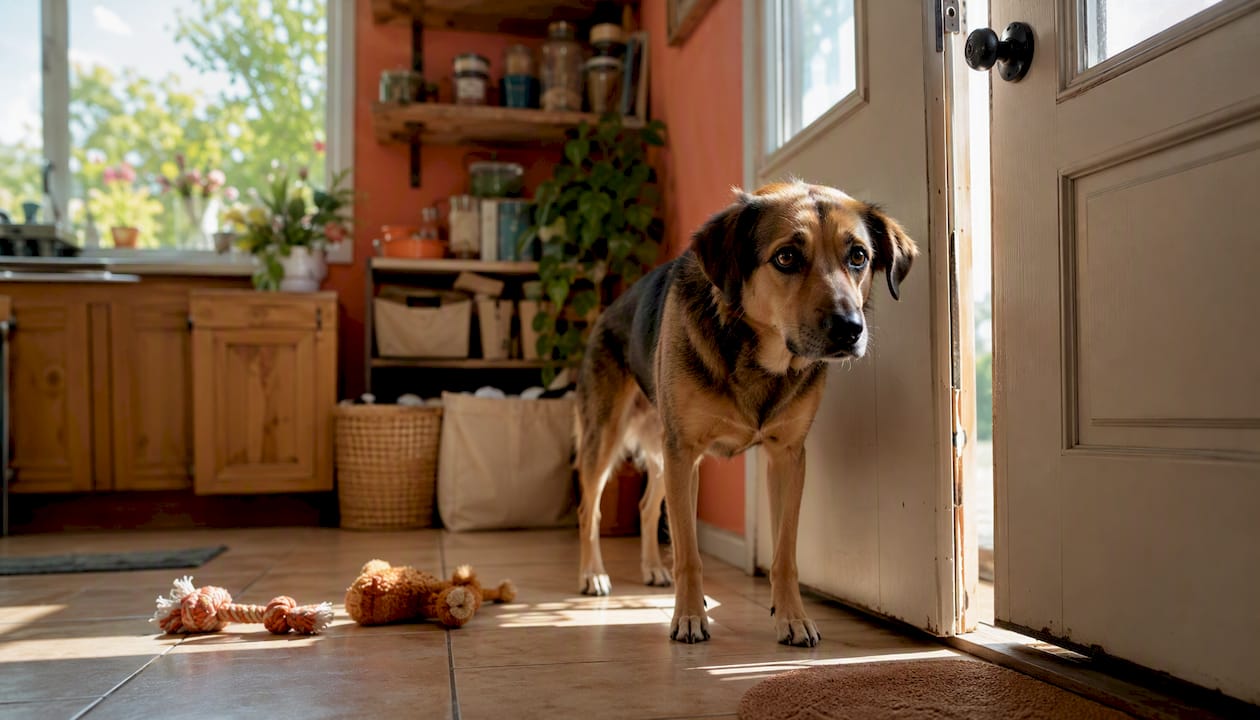
If your dog barks continuously, destroys furniture near the front door, or soils the house only when you are out, the behaviour is most likely dog separation anxiety — a genuine distress response to being left alone, not wilful misbehaviour. The immediate priorities are keeping your dog safe, gathering evidence on video, and starting short, calm separations before the problem deepens.
Separation-related behaviour typically appears within the first 30 minutes of an owner leaving, and many dogs show no obvious signs while their owner is present, which is why owners are often caught off guard. The good news is that with a structured plan, most mild to moderate cases respond well to owner-led training.
Does this sound like your dog? Check these signs first:
- Persistent barking, howling, or whining that starts when you leave or prepare to leave
- Destructive behaviour concentrated near doors, windows, or exit points
- Toileting indoors only during your absence, despite being reliably housetrained
- Pacing, drooling, or trembling before or during your departure
- Frantic or prolonged attempts to escape a room, crate, or garden
- Exaggerated, frenzied greeting when you return, even after a short absence
- Pre-departure agitation: following you from room to room, whining as you pick up your keys
Seek veterinary help immediately if your dog is:
- Injuring itself trying to escape (broken nails, bleeding gums, lacerations)
- Vomiting continuously or showing signs of extreme physical distress
- Refusing food and water for more than 24 hours alongside other distress signs
What to do today, before anything else:
- Film your dog using a phone or tablet propped up to capture the area they use when alone
- Secure the environment: remove hazards, block access to dangerous exits, and check fencing
- Offer a stuffable toy filled with a high-value food before you leave
- Avoid scolding your dog for anything that happened while you were out — punishment after the fact increases fear rather than reducing it
Key takeaways
Separation anxiety is a treatable emotional condition, and consistent daily training — not a single product or quick fix — is what produces lasting change.
| Point | Details |
|---|---|
| Confirm it is anxiety, not boredom | Signs must occur specifically during your absence; video evidence is the most reliable diagnostic tool. |
| Safety first, always | Secure the environment and remove hazards before beginning any training programme. |
| Start smaller than you think | Begin with absences your dog tolerates without any distress, even if that is only a few seconds. |
| Use products to support training | Stuffable toys, pheromone diffusers, and anxiety vests help — but only alongside a behaviour modification plan, not instead of one. |
| Giddypets for enrichment and calming aids | Giddypets stocks stuffable toys, puzzle feeders, anxiety vests, and calming diffusers to support every stage of an owner-led plan. |
Table of Contents
- What is dog separation anxiety and why does it develop?
- Recognising the signs and ruling out other causes
- Is it boredom or separation anxiety?
- Practical safety and short-term measures you can use today
- A step-by-step desensitisation and counterconditioning programme
- What vets and recent studies say about treatment
- Where to get professional help in the UK, and what it costs
- How to prevent separation anxiety and support long-term independence
- UK resources, charities, and products that can support your plan
- What owners often get wrong about treating separation anxiety
- Giddypets stocks what your training plan actually needs
- Sources
What is dog separation anxiety and why does it develop?
Separation anxiety is a distress response in which a dog becomes acutely stressed specifically because their owner or attachment figure is absent. It is not a training failure or a sign of a “spoilt” dog. The ASPCA describes it as a genuine anxiety disorder that can involve vocalisation, destruction, and toileting, and notes that punishment is actively harmful.
Veterinary consensus has moved away from describing the condition as simple “hyperattachment.” The JAVMA consensus view frames separation-related behaviour as multifactorial, with genetic predisposition, early developmental experiences, and environmental triggers all playing a role. That matters practically: it means there is rarely one single cause to fix, and treatment needs to address the dog’s overall emotional state, not just the departure routine.
Common risk factors include:
- Gaps in early socialisation, particularly insufficient alone-time exposure as a puppy
- Recent rehoming, rescue, or a significant change in household routine (a new baby, a return to office working)
- A history of traumatic events such as kennelling during a period of illness
- Concurrent noise phobias or generalised anxiety, which can lower the threshold for distress
- Sudden changes in an owner’s schedule after a period of constant companionship
If the signs appeared suddenly in an older dog with no prior history, a veterinary check is worth arranging before beginning a behaviour programme. Urinary tract infections, cognitive dysfunction in senior dogs, and other medical conditions can mimic or worsen anxiety-related house soiling and restlessness.
Recognising the signs and ruling out other causes
The pattern that makes separation anxiety likely is this: the distressing behaviour occurs consistently during your absence and stops, or reduces sharply, when you return. That timing is the clearest diagnostic signal.
Research reviewed in PMC identifies the core clinical signs as persistent vocalisation, destructive behaviour, and house soiling during the owner’s absence. In practice, the full picture often includes:
- Persistent barking, howling, or whimpering
- Chewing or scratching at doors, window frames, or skirting boards
- Toileting indoors despite being housetrained
- Pacing, circling, or inability to settle
- Excessive salivation or drooling
- Self-directed behaviour such as licking or chewing paws
- Pre-departure agitation (shadowing you, whining as you gather your things)
- An exaggerated, prolonged greeting when you arrive home
How to monitor what is actually happening
Use this numbered checklist when reviewing your video footage or keeping a departure diary:
- Note the exact time signs begin — does distress start before you leave (pre-departure cues) or only after the door closes?
- Record how long until the first sign appears — within minutes suggests anxiety; after an hour or more may suggest boredom or a medical trigger
- Identify which areas are targeted — exit points (doors, windows) strongly suggest separation anxiety; random destruction elsewhere may not
- Check whether your dog eats the enrichment toy you left — a dog too distressed to eat is likely above the anxiety threshold and needs a gentler starting point
- Log duration and severity — does distress escalate, plateau, or resolve on its own?
What else could it be?
Not every dog who misbehaves alone has separation anxiety. VCA Animal Hospitals cautions that crate or confinement anxiety can look identical but responds to different management. Other conditions to consider:
- Incomplete housetraining: toileting indoors at all times, not only during absences
- Boredom or under-stimulation: destructive behaviour that also occurs when you are home and distracted
- Noise phobia: distress tied to specific sounds (traffic, fireworks) rather than your absence
- Medical causes: urinary tract infections, gastrointestinal upset, or cognitive changes in older dogs
Pro Tip: Bring a timestamped video, a written diary of recent departures (time left, time returned, what you found), and a note of any recent household changes to your vet or behaviourist appointment. This evidence cuts assessment time significantly and leads to a more targeted plan.
Is it boredom or separation anxiety?
The clearest distinguishing feature is context: separation anxiety occurs specifically when the owner is absent, while boredom-related behaviour tends to appear whenever the dog is under-stimulated, regardless of who is home.
A dog that chews the sofa while you are sitting in the next room, or digs in the garden while you are gardening nearby, is showing a management or enrichment gap, not separation anxiety. Separation anxiety, by contrast, typically starts during pre-departure cues — the moment you pick up your keys or put on your coat — or within the first few minutes of you leaving.
A simple self-test to run over three to five days:
Observe whether the behaviour occurs only during your absences. Leave a stuffable toy or puzzle feeder when you go out. If your dog engages with it calmly and the house is undisturbed, boredom or routine is the more likely explanation. If the toy is untouched and the distress signs are present on video, anxiety is the more probable cause — a dog that is genuinely panicked will not eat, even high-value food.
One further signal: if your dog begins showing distress before you have even left (panting, pacing, following you obsessively as you prepare to go), treat it as separation anxiety regardless of what happens after the door closes. Pre-departure anxiety is a reliable indicator that the problem is emotional, not simply a matter of needing more exercise or stimulation.
Practical safety and short-term measures you can use today
Before any training begins, the environment needs to be safe. A dog in a panic can injure itself badly trying to escape, and a damaged home creates additional stress for the owner, which feeds back into the dog’s anxiety.
Immediate safety steps:
- Confine your dog to a single, safe room rather than giving free run of the house — this limits the area they can damage and reduces the number of exit points they fixate on
- Remove hazards: trailing cables, toxic plants, unsecured bins, and anything that could be swallowed
- Check that windows and garden fencing are secure before leaving
- Provide fresh water and a toilet break immediately before you go
Supportive products that can help in the short term:
- Stuffable puzzle toys (KONG-style): filling these with peanut butter, wet food, or kibble and freezing them overnight creates a longer-lasting distraction. The ASPCA notes that counterconditioning with food toys can build a positive association with solitude, though a dog that is too distressed to eat will not engage with them — which itself is useful diagnostic information
- Adaptil pheromone diffusers: Adaptil (dog appeasing pheromone, or DAP) is a synthetic version of the calming pheromone produced by nursing mothers. Plug-in diffusers or sprays can reduce background anxiety and are widely available in the UK. They work best as part of a broader plan rather than as a standalone fix
- Anxiety vests (Thundershirt-style): gentle, constant pressure can reduce physiological signs of anxiety in some dogs. Dog anxiety vests are not effective for every dog, but they carry no risk and are worth trialling during departures
- Calming sprays and diffusers: pheromone sprays applied to bedding or a bandana can provide additional environmental support
Two common mistakes to avoid:
The RSPCA advises keeping departures and reunions calm and neutral. Lengthy, emotional goodbyes raise your dog’s anticipatory anxiety before you have even left. Equally, an excited, fussing reunion rewards the anxious state. Keep both low-key: leave quietly, return quietly, and wait for your dog to settle before giving attention.
Never punish your dog for anything that happened while you were out. The Merck Veterinary Manual is clear that punishment after the event is counterproductive — the dog cannot connect the scolding to the earlier behaviour, and it increases fear.
A step-by-step desensitisation and counterconditioning programme
Systematic desensitisation combined with counterconditioning is the evidence-backed approach for mild to moderate separation anxiety. Dogs Trust recommends it as the primary owner-led treatment, and PetMD confirms that keeping every session sub-threshold — meaning your dog never reaches full panic — is the non-negotiable rule.
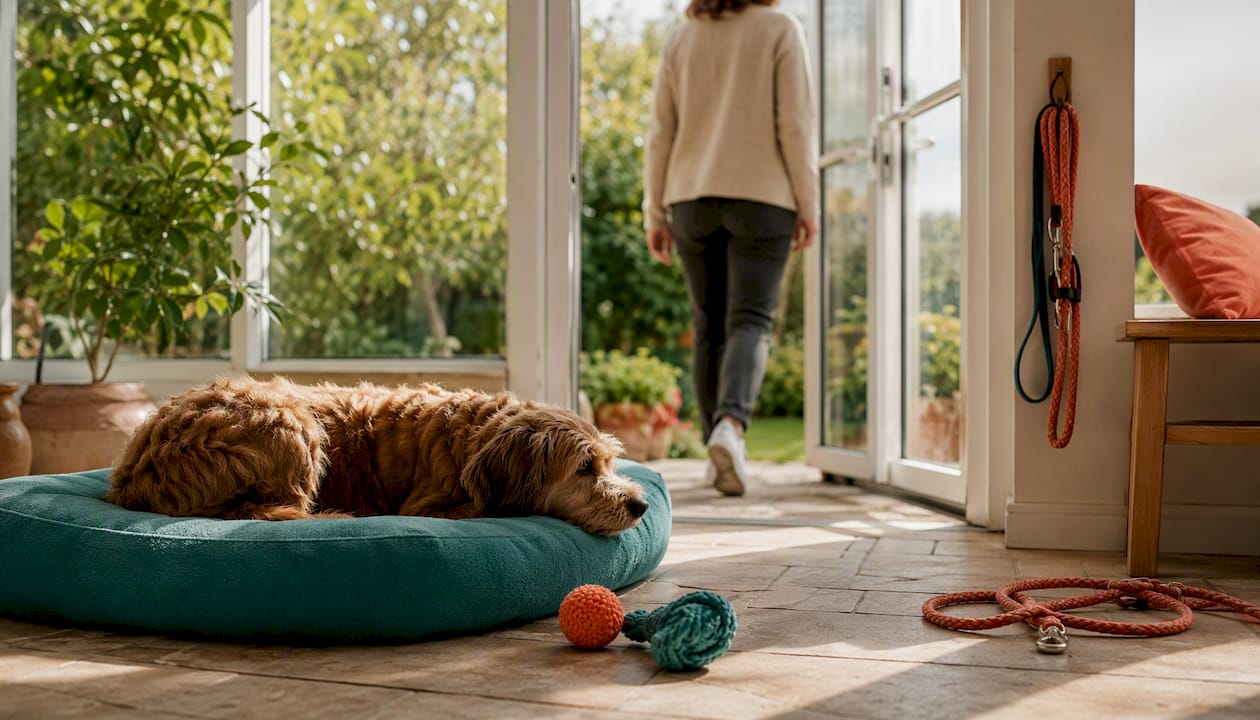
Owner-led training is appropriate when your dog’s signs are mild to moderate: some vocalisation, minor destruction, but no self-injury and no extreme escape attempts. If your dog is injuring itself or the distress is severe, start with a vet consultation before attempting this programme.
The training plan
-
Establish your starting point. From your video evidence, identify the shortest absence your dog tolerates without showing any distress. This might be five seconds or five minutes. That is your baseline.
-
Begin with micro-absences. Step out of the room (not out of the house) for two to three seconds. Return calmly before any distress begins. Repeat ten times across the day.
-
Introduce a pre-departure cue. Give your dog a stuffable toy filled with high-value food (frozen peanut butter, cream cheese, or wet food) only when you are about to leave. This begins counterconditioning: the toy predicts your departure, and your departure predicts something good.
-
Increase duration in small steps. Add five to ten seconds to each absence only when your dog remains calm and below threshold. If distress appears, you have moved too fast — drop back to the previous duration and consolidate.
-
Vary the pattern. Do not increase duration in a straight line. Mix longer absences with shorter ones so your dog cannot predict and anticipate the hardest ones.
-
Practise multiple short sessions daily. Frequency matters more than session length. Aim for three to five short sessions per day rather than one long one.
-
Progress to leaving the house. Once your dog tolerates several minutes calmly, begin stepping outside the front door. Use the same gradual progression.
-
Track progress. Keep a diary: date, duration, dog’s behaviour, whether the food toy was eaten. Video at least once a week. If there is no improvement after three to four weeks of consistent daily practice, seek professional input.
Pro Tip: Freeze stuffed toys the night before to make them last two to three times longer. Layer the filling: kibble at the base, a smear of wet food in the middle, and a plug of peanut butter or cream cheese at the opening. The dog has to work through each layer, extending the counterconditioning window. Puzzle toys and snuffle mats can serve the same purpose for dogs who prefer foraging over licking.
What vets and recent studies say about treatment
Veterinary consensus is consistent: behaviour modification is the foundation of treatment for separation anxiety, and medication is an adjunct for moderate to severe cases, not a replacement for training. The Merck Veterinary Manual identifies fluoxetine (an SSRI) and clomipramine (a tricyclic antidepressant, or TCA) as the most commonly used medications, used alongside behaviour plans to lower the anxiety threshold and allow training to proceed.
The JAVMA consensus reinforces that the condition is multifactorial, which is why medication alone rarely resolves it. The drugs reduce the intensity of the anxiety response so the dog can learn during behaviour sessions — they do not teach the dog to be calm independently.
| Medication | Class | Typical role | Time to effect |
|---|---|---|---|
| Fluoxetine | SSRI | Daily adjunct to behaviour modification | 4–6 weeks |
| Clomipramine | TCA | Daily adjunct to behaviour modification | 4–6 weeks |
| Alprazolam | Benzodiazepine | Situational (short-term, event-based) | 30–60 minutes |
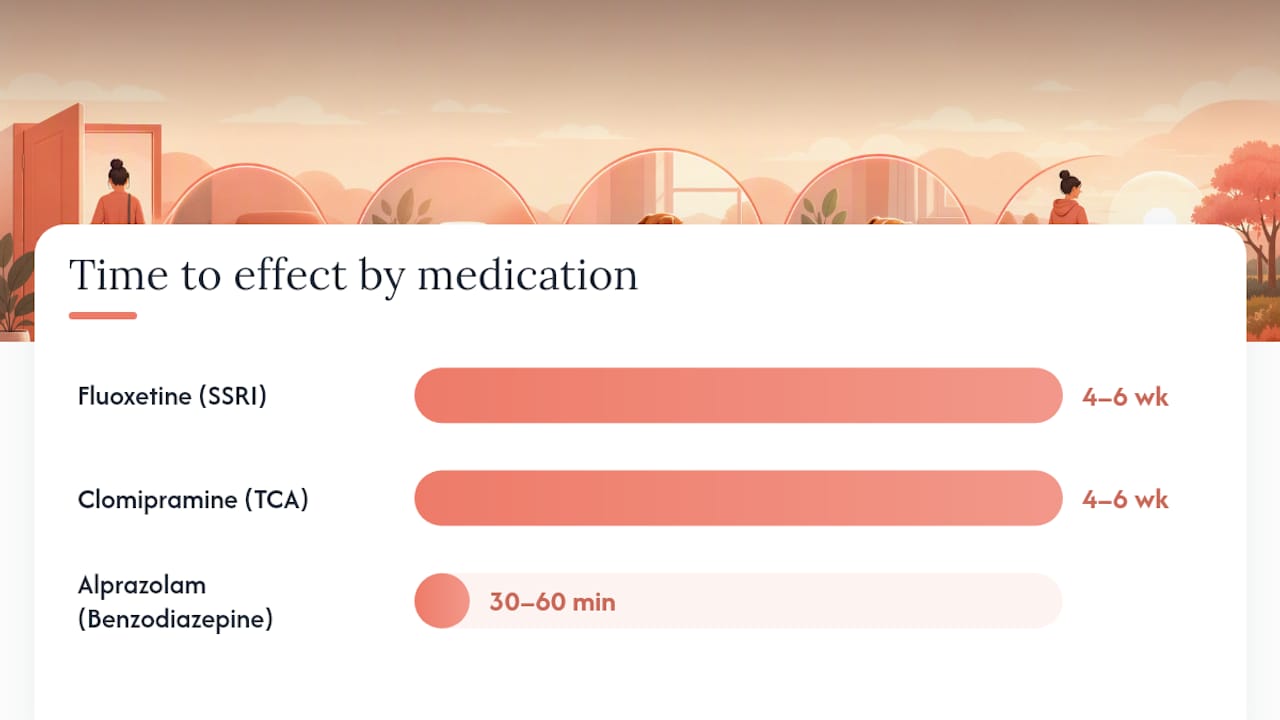
This table is for general information only. Dosing, suitability, and prescribing decisions are entirely the responsibility of your veterinary surgeon. Never administer prescription medication without veterinary guidance.
When to escalate to a vet or veterinary behaviourist:
- Self-injury during escape attempts or continuous vocalisation that neighbours have reported
- No measurable improvement after four weeks of consistent, daily owner-led training
- Signs that appeared suddenly in an adult dog with no prior history
- Concurrent aggression, severe noise phobia, or generalised anxiety that complicates the picture
- An owner who cannot commit to the frequency of sessions the programme requires
Where to get professional help in the UK, and what it costs
If your dog is injuring itself, or four weeks of owner-led training has produced no clear progress, professional help is the right next step. The type of professional matters.
Your options in the UK:
- Your vet: the first port of call for any sudden-onset signs, self-injury, or when medication may be needed. A vet can also refer you to a veterinary behaviourist (a specialist with postgraduate clinical training in animal behaviour, recognised by the RCVS).
- Clinical animal behaviourist: look for membership of the Association of Pet Behaviour Counsellors (APBC) or the Fellowship of the Animal Behaviour Clinicians (FABC). These practitioners work with veterinary referral and can design a full behaviour modification programme.
- Accredited dog trainer: for mild cases, a trainer accredited by the Association of Pet Dog Trainers (APDT) or the Institute of Modern Dog Trainers (IMDT) can support owner-led work. They are not qualified to diagnose or treat clinical anxiety.
UK charities and free resources:
- RSPCA: free online guidance, a helpline, and local welfare officers who can advise on rehomed or rescue dogs
- Dogs Trust: free owner-led training guides, a dog behaviour helpline, and rehoming support
Estimated costs (UK, indicative ranges — prices vary by region and case severity):
- Initial vet consultation: £40–£80
- Veterinary behaviourist assessment: £200–£400
- Clinical animal behaviourist assessment: £100–£250
- Follow-up behaviour sessions: £60–£120 per session
- Prescription medication (monthly, varies by drug and dog size): £20–£60
What to bring to your appointment:
- Timestamped video footage of your dog during absences
- A written diary of departures, durations, and what you found on return
- A list of interventions already tried (enrichment, pheromones, training attempts)
- Any recent household changes that preceded the onset of signs
When contacting a behaviourist, ask directly: what qualifications do you hold, do you work with veterinary referral, and what methods do you use? A reputable practitioner will welcome those questions.
How to prevent separation anxiety and support long-term independence
Early, graduated alone-time exposure is the single most effective preventative measure. Puppies that learn from the start that brief separations are normal and safe are far less likely to develop distress responses later. Lifelong maintenance of that independence is often needed, particularly after household disruptions.
Prevention checklist for puppies:
- Begin short out-of-sight separations from the first week at home: step into another room, return calmly, repeat
- Introduce a crate or safe space as a positive resting place, never as punishment
- Vary who cares for the puppy so attachment does not concentrate on one person
- Practise mock departures: pick up keys, put on a coat, then sit back down without leaving
- Build alone time gradually from minutes to hours over several weeks
For adult dogs and long-term maintenance:
- Keep a predictable daily routine: consistent feeding times, walks, and quiet periods help regulate a dog’s stress response
- Maintain enrichment even when the dog appears settled — puzzle feeders and automatic pet feeders can provide mental stimulation and a sense of routine during absences
- Schedule regular quiet time where the dog rests independently, even when you are home
- Avoid sudden large increases in alone time after a period of constant companionship (such as the end of a holiday or a change in working pattern)
Buffering against relapse during household transitions:
Moving house, a new baby, or a change in work schedule are the most common triggers for relapse in dogs that have previously recovered. When you know a transition is coming, reintroduce the graduated absence programme two to four weeks beforehand, even if the dog currently seems settled. A short refresher is far easier than treating a full relapse.
UK resources, charities, and products that can support your plan
Products can support a behaviour modification plan, but they cannot replace it. A pheromone diffuser running in an empty room does nothing if the dog has never been taught that being alone is safe. Used alongside a training programme, however, the right products can meaningfully reduce background anxiety and extend the counterconditioning window.
Product categories and when they help most:
- Pheromone diffusers (Adaptil): plug in 24–48 hours before beginning a training programme to allow the pheromone level to build in the room. Useful as background support throughout the programme. Available as a diffuser, spray, or Adaptil chewable tablets for travel or situational use.
- Anxiety vests: apply snugly before departure. Most useful for dogs with mild to moderate anxiety where the physical sensation of gentle pressure provides reassurance. Not suitable as the only intervention for severe cases.
What to avoid:
- Over-the-counter sedative supplements used without veterinary advice — some are harmless but ineffective; others interact with prescribed medication
- Leaving a radio or television on as a substitute for training — background noise can reduce isolation but does not address the underlying anxiety
UK charities offering free support:
- RSPCA: welfare advice, a helpline, and guidance on rehomed dogs with pre-existing anxiety
- Dogs Trust: free downloadable training guides, a behaviour helpline, and a network of rehoming centres whose staff can advise on dogs with known separation histories
What owners often get wrong about treating separation anxiety
Most owners approach separation anxiety as a training problem. It is not, quite. It is an emotional regulation problem that training addresses indirectly, by teaching the dog that being alone is predictable and safe, not by teaching them to “behave.” That distinction changes how you measure progress.
The instinct to comfort a distressed dog is natural and not wrong in itself, but the timing matters enormously. Returning to a dog mid-panic, or greeting them effusively when they are still in an aroused state, reinforces the anxiety cycle. The dog learns that distress brings the owner back, which makes the next absence harder. Calm, neutral returns — waiting for four paws on the floor before any greeting — interrupt that cycle without being unkind.
There is also a widespread assumption that medication is a last resort, something to try only when everything else has failed. Veterinary consensus does not support that view. For moderate to severe cases, medication lowers the anxiety threshold to a point where behaviour modification can actually work. Starting medication and training together, rather than sequentially, tends to produce faster and more durable results. That conversation belongs with your vet, not with a training forum.
Finally, owners consistently underestimate how long this takes. Mild cases can show clear progress within four to six weeks of daily practice. Moderate cases often take three to six months. Severe cases, particularly in rescue dogs with long histories of distress, may require ongoing management rather than a cure. Measuring progress in small, concrete increments — five more seconds of calm, the food toy eaten for the first time — keeps the plan moving when the overall timeline feels long.
Giddypets stocks what your training plan actually needs
The behaviour modification plan outlined here works best when you have the right tools ready from day one. Giddypets is a UK-based pet supplies store stocking the enrichment and calming products that owners use most during separation anxiety programmes: stuffable toys for counterconditioning, pheromone diffusers for background support, and anxiety vests for situational calming.
Every product category is curated with welfare in mind, and the site includes vet-approved guidance alongside the shop so you can make informed choices rather than guessing. For the counterconditioning phase, stuffable dog toys are the highest-priority purchase — freeze them the night before and your dog has a meaningful, positive association with your departure from the very first session. For dogs that need more mental engagement, puzzle toys and snuffle mats extend that window further. If you are managing mealtimes around a training schedule, automatic pet feeders let you keep feeding times consistent even when your routine changes.
Browse the full range at Giddypets and, for any clinical concerns, contact your vet before starting a programme.
Sources
The following sources informed this guide and are worth bookmarking for ongoing reference.
- Rspca
- Separation anxiety in dogs: signs, causes and how to help
- Behavior Problems of Dogs - Behavior - Merck Veterinary Manual
- Separation Anxiety | ASPCA
- How To Help a Dog With Separation Anxiety | PetMD
- Separation Anxiety in Dogs | VCA Animal Hospitals
- Canine separation anxiety: strategies for treatment and management - PMC
This article is general information, not a substitute for advice from a qualified doctor. Consult a qualified healthcare professional about your own circumstances before acting on anything here.