


Tick removal for dogs: safe step-by-step guide
Tick removal for dogs: safe step-by-step guide
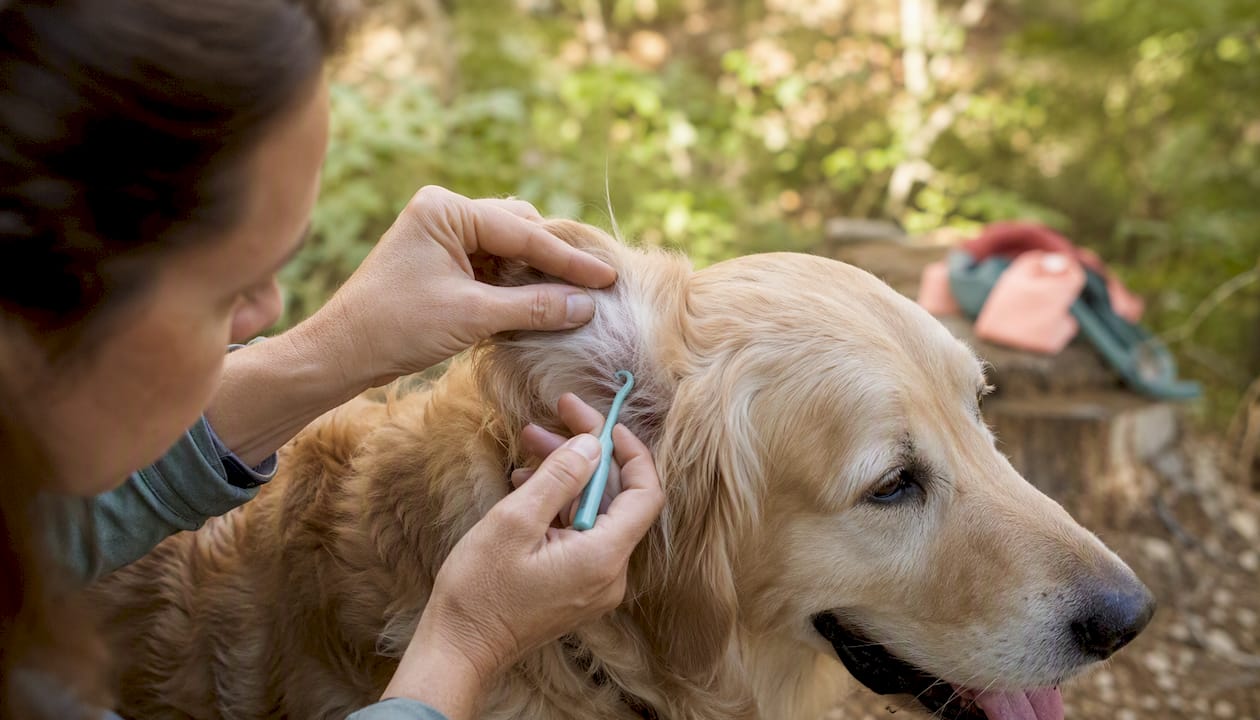
Remove an attached tick straight away using a tick-removal tool or fine-tipped tweezers. Grasp the tick as close to the skin as possible and lift steadily without squeezing the body. That single action, done promptly, is the most important thing you can do. Pathogen transmission can begin as quickly as three to six hours after a bite, so speed genuinely matters.
If you find a tick on your dog right now, here is what to do:
- Restrain your dog calmly — ask someone to hold them gently or use a treat to keep them still.
- Part the fur to expose the skin around the tick.
- Position your tick tool or tweezers as close to the skin surface as possible.
- Grip the tick’s head or mouthparts, not the swollen body.
- Lift steadily and smoothly — no jerking, no twisting with tweezers.
- Clean the bite site and your hands afterwards.
Never burn a tick, smother it with petroleum jelly, douse it with alcohol, or squeeze its body. These folk remedies can cause the tick to regurgitate fluid back into your dog, which may increase the risk of disease transmission.
Key takeaways
Safe, prompt tick removal is the single most effective action you can take to protect your dog from tick-borne illness.
| Point | Details |
|---|---|
| Remove promptly and correctly | Use a tick hook or fine-tipped tweezers; grip close to the skin and lift steadily without squeezing. |
| Avoid folk remedies | Burning, petroleum jelly, and alcohol can cause the tick to regurgitate fluid, increasing disease risk. |
| Clean and monitor | Wash the bite site with soap and water or iodine; watch your dog for fever, lameness, or lethargy for several weeks. |
| Prevent year-round | Combine spot-on treatments, oral chewables, or a repellent collar with regular post-walk checks. |
| Giddy Pets kit | The 8-in-1 Tick Removal and Flea Comb Kit gives you the right tools ready to use at home. |
Table of Contents
- How do you spot a tick on your dog?
- How to remove a tick from your dog safely
- Aftercare: cleaning the bite and monitoring your dog
- What if part of the tick stays in the skin?
- Tick-borne diseases UK dog owners should know about
- How can you prevent ticks on your dog?
- Which tools make tick removal easier?
- Where and when are ticks most common in the UK?
- Finding a tick is not a crisis — here is why calm action works
- The Giddy Pets tick removal kit: ready when you need it
- Sources
How do you spot a tick on your dog?
Ticks vary considerably in size depending on their life stage. An unfed larva is barely visible — roughly the size of a poppy seed. A nymph is slightly larger, and an adult can reach a few millimetres before feeding. Once engorged with blood, a fully fed adult tick can swell noticeably and turns a grey-blue colour, which is when most owners first notice them.
Run your fingers slowly through your dog’s coat after every walk in grassy or wooded areas. You are feeling for a small, firm bump rather than looking for one. Ticks favour warm, sheltered spots where the skin is thin.
Common hiding places to check:
- Inside and around the ears
- Between the toes and under the paw pads
- In the armpits (axillae)
- Around the groin and inner thighs
- Around the base of the tail
- Under the collar
A systematic check takes about two minutes. Start at the head, work backwards, and lift the collar. If you notice a small red or irritated patch of skin without a tick attached, the tick may have already dropped off — monitor that area for signs of local infection over the following days.
How to remove a tick from your dog safely
Using a dedicated tick-removal tool (preferred method)
A dedicated tick-removal tool is the preferred option, particularly through thick fur, because it is less likely to squeeze the tick’s body than tweezers.
- Part the fur to expose the tick fully.
- Slide the notch of the tool under the tick at skin level, positioning it around the mouthparts.
- Rotate or lift gently according to your tool’s instructions — most tick hooks twist rather than pull straight up.
- Lift the tick away cleanly without crushing it.
- Check that the mouthparts have come away with the body.
Using fine-tipped tweezers (fallback method)
- Part the fur and locate the tick.
- Grip the tick as close to the skin as possible — aim for the mouthparts, not the swollen abdomen.
- Pull upward with slow, steady pressure. Do not jerk or twist.
- Once removed, check the bite site for any remaining mouthparts.
What not to do
Folk remedies such as burning, petroleum jelly, alcohol, or nail varnish are genuinely dangerous. They can stress the tick and cause it to regurgitate pathogen-laden fluids directly into your dog. Avoid squeezing the body for the same reason.
Pro Tip: If your dog wriggles, ask a second person to hold them gently and speak in a calm, low voice. A dog treat pouch kept nearby lets you reward stillness without breaking your grip on the tool.
Virbac UK advises keeping your dog calm and still throughout removal. If the tick is in a sensitive location or there are multiple ticks, contact your vet rather than attempting removal yourself.
Aftercare: cleaning the bite and monitoring your dog
Once the tick is out, clean the bite site with soap and water, then apply rubbing alcohol or an iodine scrub. Wash your hands thoroughly and clean your removal tool with alcohol before storing it. Avoid touching the tick directly with bare fingers.
Disposing of the tick safely:
- Seal it in a small container or wrap it firmly in tape.
- Flush it down the toilet or double-bag it and place it in the bin.
- Do not crush it between your fingers.
Some vets suggest keeping the tick in a sealed container for a short period in case your dog develops symptoms and testing becomes relevant. Veterinarians generally prioritise monitoring your dog’s clinical signs for up to four weeks rather than relying on tick testing alone, unless symptoms appear or there is a regional reason to test.
Watch for these signs over the following weeks:
- Fever (pyrexia — your dog feels hot to the touch, seems lethargic)
- Reduced appetite or reluctance to move
- Lameness or swollen joints
- Worsening redness, heat, swelling, or discharge at the bite site
Contact your vet promptly if any of these develop. The RSPCA advises seeking veterinary help if you cannot remove the tick safely, if it is in a sensitive location, or if you notice signs of infection or systemic illness after a bite.
What if part of the tick stays in the skin?
It happens. The mouthparts sometimes break off during removal, and it can feel alarming. The reassuring truth is that retained mouthparts are not the primary transmission risk — the tick’s body is no longer attached. Experts advise against digging at the skin to remove them, as this causes more tissue damage than the remnant itself. The skin will often expel the material naturally over a few days.
Clean the area, keep an eye on it, and leave it alone. Contact your vet if the site becomes hot, swollen, or starts to discharge, or if the remnant is near your dog’s eye or ear canal.
Tick-borne diseases UK dog owners should know about
UK ticks can carry Lyme disease and other infections, which is why prompt removal and regular monitoring matter. The table below summarises the main diseases relevant to dogs in the UK.
| Disease | Cause | Key signs in dogs | Action |
|---|---|---|---|
| Lyme disease | Borrelia burgdorferi bacteria | Fever, lameness, swollen joints, lethargy | Contact your vet; antibiotic treatment usually effective if caught early |
| Babesiosis | Babesia parasite | Pale gums, dark urine, lethargy, anaemia | Urgent vet care required; more common after travel to mainland Europe |
| Ehrlichiosis | Ehrlichia bacteria | Lethargy, weight loss, bleeding, fever | Vet care required; associated with travel to affected regions |
Babesiosis and ehrlichiosis are more commonly seen in dogs that have recently travelled abroad or been imported. Always inform your vet if your dog has been outside the UK.
Transmission timing is the critical factor across all these diseases. Because pathogens can begin passing from tick to host within hours of attachment, removing a tick promptly — even before it is fully engorged — meaningfully reduces risk.
How can you prevent ticks on your dog?
Prevention is far easier than treatment. Several approaches are available in the UK, and most vets recommend combining at least two methods for dogs with regular outdoor access.

| Method | How it works | Duration | Notes |
|---|---|---|---|
| Spot-on treatments | Applied to skin; repels or kills ticks on contact | 4–8 weeks | Many available over the counter; some require prescription |
| Oral chewables | Systemic; kills ticks after they bite | 1–3 months | Prescription required; not suitable for all breeds or ages |
| Tick-repellent collars | Releases active ingredient across coat | Up to 8 months | Useful alongside other methods; check suitability for puppies |
| Regular full-body checks | Manual detection after walks | After every walk | No chemical exposure; catches ticks before transmission begins |
| Environmental management | Trim grass, remove leaf litter near walking areas | Ongoing | Reduces tick habitat around home |
Some prevention guidelines support year-round flea and tick control for pets in certain areas or lifestyles — discuss the right schedule with your vet, particularly if your dog walks in woodland or fields regularly. Woodland dogs and those in rural areas warrant checks after every outing; city dogs on paved routes need them less often but should still be checked after any green-space visit.
Always consult your vet before starting a new preventive product, especially for puppies, pregnant dogs, or households with multiple pets where product interactions may be a consideration.
Which tools make tick removal easier?
The right tool makes a real difference, especially on a wriggly dog with a thick coat. Here is a brief rundown of the main options:
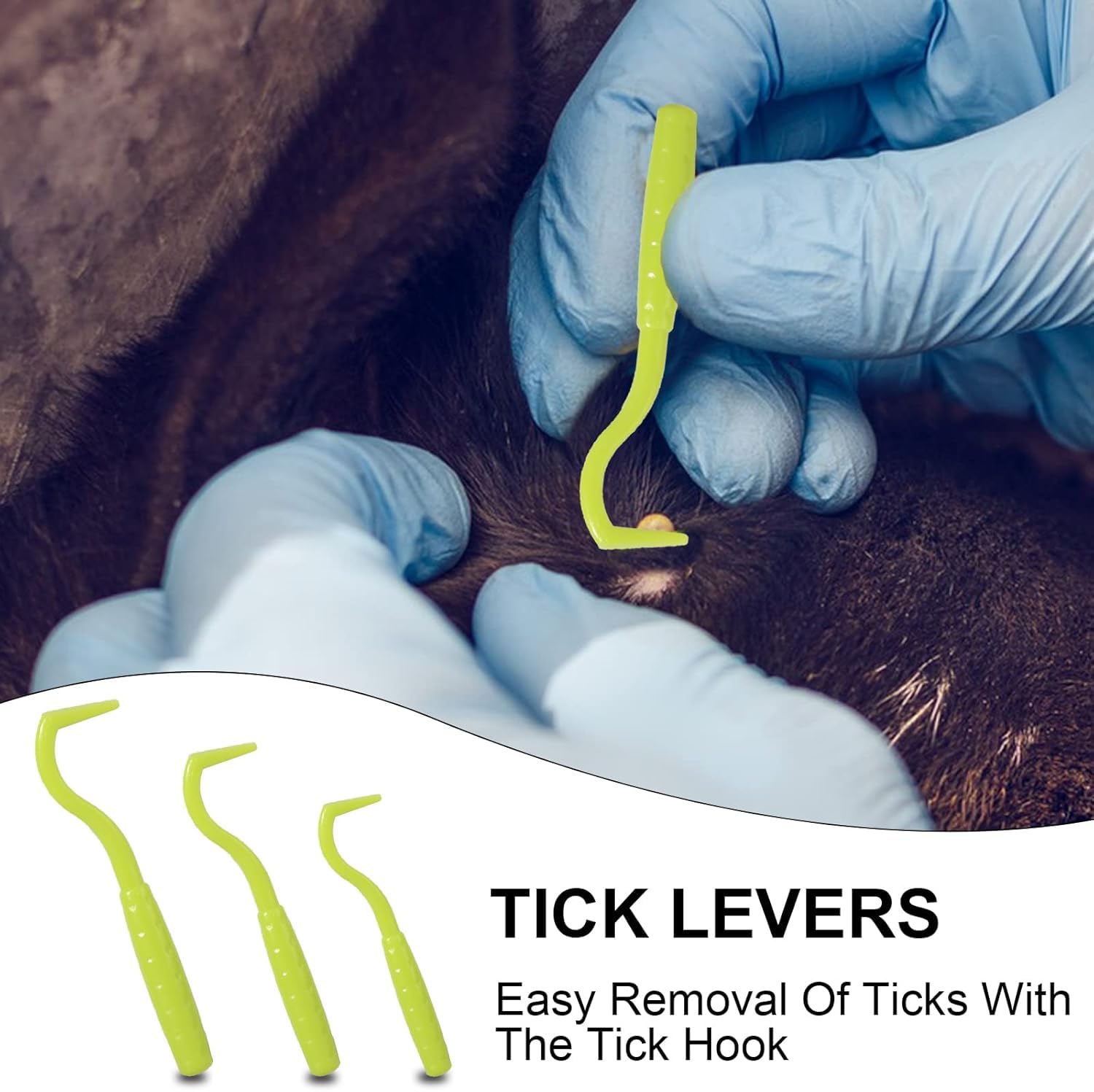
- Tick hooks (twisters): The most widely recommended type. Slide under the tick and rotate to disengage the mouthparts without squeezing. Works well through dense fur.
- Fine-tipped tweezers: A reliable fallback when a dedicated tool is unavailable. Pull straight up with steady pressure — do not twist.
- Flea combs: Useful for detecting ticks during routine grooming, particularly on short-coated dogs. Not a removal tool on their own.
- Magnifiers: Helpful for spotting nymphs and larvae, which are very small and easy to miss.
Store tools in a clean, dry container and wipe them with alcohol after each use.
The Giddy Pets 8-in-1 Tick Removal and Flea Comb Kit brings together tick hooks, tweezers, a flea comb, and storage in one compact kit — a practical choice for owners who want everything in one place. Always follow the product instructions and your vet’s guidance when using any removal tool. You can also browse the full range of tick and flea removal tools to find the right fit for your dog’s coat type.
Where and when are ticks most common in the UK?
Ticks thrive in specific habitats and are most active during warmer months, though they can be encountered year-round in mild conditions.
Habitats to be aware of:
- Tall grass and bracken in moorland and heathland
- Woodland edges and paths through dense undergrowth
- Hedgerows and the borders between lawns and fields
- Deer parks and areas with high wildlife activity
Tick activity in the UK peaks roughly from March through October, with the highest numbers typically seen in spring and early autumn. That said, mild winters have extended the active season in many parts of the country, so a post-walk check remains worthwhile even in cooler months.
If your dog has recently travelled abroad or has been imported from another country, tell your vet. Different regions carry different tick species, and some — such as those associated with babesiosis in parts of mainland Europe — are not established in the UK. Keeping vegetation trimmed and removing leaf litter near your home also reduces the tick burden in your immediate environment.
Finding a tick is not a crisis — here is why calm action works
Discovering a tick on your dog can feel alarming, but the reality is that most dog owners in the UK will encounter one at some point, particularly if they walk in rural or semi-rural areas. Removal is usually straightforward when you have the right tool and a steady hand.
The guidance in this article reflects vet-reviewed best practice: remove promptly, use the correct tool, clean the site, and monitor your dog for a few weeks. Those four steps cover the vast majority of situations. For anything that feels uncertain — a tick in a difficult location, signs of illness, or a dog that has recently returned from abroad — your vet is always the right call.
The Giddy Pets tick removal kit: ready when you need it
When a tick appears, the last thing you want is to be searching the kitchen drawers for something sharp enough to grip it. The Giddy Pets 8-in-1 Tick Removal and Flea Comb Kit keeps everything in one place: tick hooks in multiple sizes, fine-tipped tweezers, a flea comb, and a storage box — all designed for safe, clean removal at home.

It is a practical, low-cost addition to any dog owner’s kit, particularly for those who walk in tick-prone areas regularly. Browse the full flea and tick remover range on the Giddy Pets website, and if your dog shows any signs of illness after a tick bite, contact your vet without delay.
Sources
- Tick Removal - Integumentary System - Merck Veterinary Manual
- How To Remove A Tick From A Dog Or Cat - PDSA
- How to Remove a Tick from Your Dog - AKC
- How to remove ticks on dogs safely | Virbac UK - Virbac UK
- Ticks on Dogs and Cats - RSPCA
This article is general information, not a substitute for advice from a qualified doctor. Consult a qualified healthcare professional about your own circumstances before acting on anything here.