
From 3 weeks to adult: UK cat worming schedule with risk based dosing

From 3 weeks to adult: UK cat worming schedule with risk based dosing
Kittens need worming regularly from around 3 weeks old until 8 weeks, then monthly until they reach 6 months. Adult cats need worming regularly every few months, though hunters, raw feeders, and households with young children or vulnerable people often need monthly treatment. Always weigh your cat before dosing, and speak to your vet about prescription-only wormers or a tailored risk-based plan.
TL;DR:
- Regular kitten worming starts at three weeks old with doses every two weeks until eight weeks, then switches to monthly treatments until six months.
- Adult cats should be wormed every three months as a baseline, but higher-risk cats may need monthly treatments, especially if they hunt or share a household with vulnerable people.
- Weighing accurately is crucial for kittens due to their tiny size, and owners should use scales and round up doses for better safety.
- Faecal testing cannot reliably replace routine worming, particularly for detecting tapeworms, which are shed irregularly and may require specific testing methods.
- Worming products vary, and owners must choose appropriate, correctly dosed treatments based on the cat’s weight and risk factors, with vet guidance for prescription-only medications.
Table of Contents
- Kitten worming schedule: the age-staged timetable
- How often should you worm an adult cat?
- What worms affect cats, and what signs should you watch for?
- Can faecal testing replace routine worming?
- How do you choose and dose a worming treatment safely?
- Giddy Pets’ perspective on getting the schedule right
- How Giddy Pets supports your worming routine
- Sources
Kitten worming schedule: the age-staged timetable
Kittens arrive in the world already carrying a worm risk they didn’t choose. Roundworm larvae pass from mother to kitten through the placenta and, more commonly, through her milk. That’s why vets treat kittens as though they’re already infected, rather than waiting for symptoms to appear.
The standard kitten worming timetable most UK vets follow looks like this:
- 3 weeks old: first treatment, then repeat every two weeks until 8 weeks.
- 8 weeks to 6 months: switch to monthly treatments.
- 6 months onward: move onto the adult schedule (covered below).
Some practices start slightly earlier, at 2 to 3 weeks, moving to monthly doses from around 6 weeks. Product labelling varies, so always check the packet or ask your vet which protocol suits the specific wormer you’re using.
Weighing accurately matters more with kittens than with any other life stage, because their tiny body weight leaves almost no margin for error. Use kitchen scales rather than guesswork, and if your kitten falls between dose bands, ask your vet whether to round up rather than under-treat.
If a kitten seems lethargic, has a swollen belly, or is losing weight despite eating well, don’t wait for the next scheduled dose. Book a vet visit. Heavy worm burdens hit kittens harder than adults because their reserves are so much smaller.
Pro Tip: Keep a simple diary or phone reminder for each kitten’s treatment dates. Litters wormed on the same day often drift apart in weight, and dosing by memory instead of by current weight is one of the easiest ways to under-treat without realising it.
How often should you worm an adult cat?
Once your cat passes 6 months, the goalposts move from a tight fortnightly schedule to a steadier rhythm. The standard preventative minimum for adult cats is treatment every three months, four times a year. That baseline suits most indoor or low-risk cats.
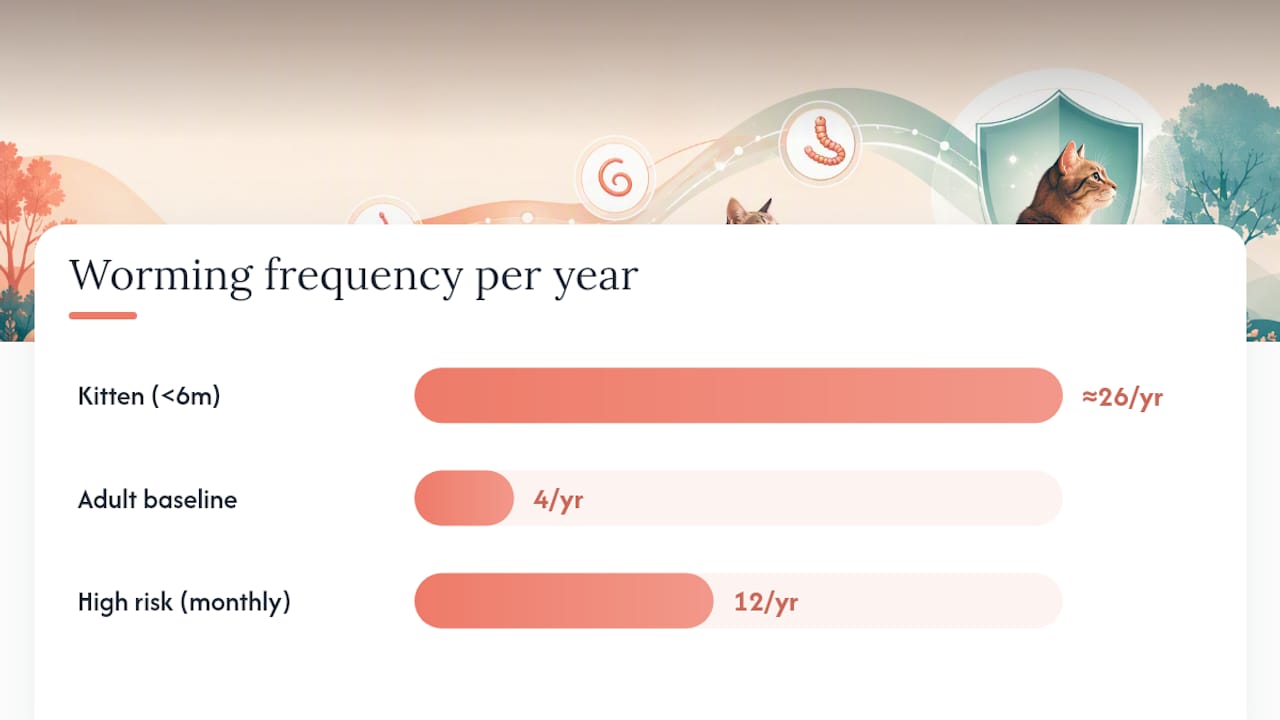
Not every cat fits that mould, though. The European Scientific Counsel Companion Animal Parasites (ESCCAP) recommends a risk-based scheme rather than a flat rule for every cat: low-risk animals fall into a group needing just one or two treatments a year, while higher-risk cats need four to twelve, and some scenarios call for monthly dosing.
You should probably escalate to monthly treatment if your cat:
- Hunts regularly and brings home prey (mice, birds, or worse).
- Eats a raw or offal-based diet.
- Lives with fleas, which act as an intermediate host for tapeworm.
- Shares a household with young children, elderly relatives, or anyone immunocompromised.
- Lives in a multi-cat household where other cats’ worming history is unknown.
ESCCAP’s risk framework splits cats into two broad groups — Group A cats need one to two treatments yearly, while Group B cats need four to twelve, with monthly treatment recommended for specific scenarios such as lungworm exposure or high zoonotic risk in the home.
Monthly treatment isn’t about being overcautious for its own sake. In high-risk households, it can push egg shedding close to zero, which matters most where small children share floor space and litter trays with the cat.
What worms affect cats, and what signs should you watch for?
Four parasites cause most feline worm problems in the UK: roundworms (usually from milk or prey), tapeworms (from fleas or hunting), hookworms (less common but picked up from contaminated ground), and lungworm (via slugs, snails, or infected prey).
Signs are often absent entirely, which is precisely why a schedule matters more than symptom-spotting. When signs do show, watch for:
- Small, rice-like segments around the tail or in bedding (tapeworm).
- Scooting or excessive bottom-licking.
- A dull, poor-quality coat despite good feeding.
- Unexplained weight loss or a pot-bellied appearance in kittens.
Beyond your cat’s own comfort, there’s a public health angle. Toxocara roundworm eggs shed in cat faeces can infect humans, particularly children who play in contaminated soil. Consistent worming isn’t only about your cat’s gut. It’s a household safety measure too.
Can faecal testing replace routine worming?
Testing can work as a genuine alternative to blanket treatment, provided it’s done at the same frequency you’d otherwise treat. That’s the key caveat vets stress: swapping a three-monthly wormer for an occasional stool sample isn’t equivalent protection.
Faecal testing has real limits worth knowing before you rely on it:
- Standard flotation tests miss tapeworm eggs reliably — they’re shed irregularly, so a single negative sample doesn’t mean your cat is clear.
- Coproantigen tests improve detection for certain worm species and are worth asking for if tapeworm is a specific concern.
- Vets may recommend testing to confirm an infection, investigate a treatment that doesn’t seem to be working, or to monitor a cat on a reduced-treatment plan.
- Regular testing alongside treatment also helps flag emerging resistance to wormers, an issue vets are watching more closely as certain parasites adapt.
If your usual worming product doesn’t seem to be clearing symptoms, that’s a testing conversation for your vet, not a reason to simply double the dose yourself.
How do you choose and dose a worming treatment safely?
Worming products come in three main forms: oral tablets or pastes, spot-on liquids applied to the skin, and injections given by a vet. Each covers a different combination of roundworm, tapeworm, hookworm, or lungworm, so check the packaging against the parasites you’re actually targeting rather than assuming one product covers everything.
Dosing correctly comes down to one non-negotiable step: weigh your cat before every dose. Accurate weighing prevents the single most common owner error, which is eyeballing weight and underdosing as a result.
- Use kitchen scales for kittens and a bathroom scale (with you holding the cat, then subtracting your own weight) for adults.
- Pick the dose band matching that exact weight, and round up rather than down if your cat sits between bands.
- Reach for a prescription-only product, usually recommended for lungworm prevention or multi-parasite cover, only via your vet, who can also flag any interaction with other medication.
Pro Tip: If your cat fights every tablet, ask your vet whether a spot-on or a flavoured paste hidden in a small amount of wet food would work better for their temperament. Skipped doses because of a stressful ten-minute wrestling match defeat the whole schedule.
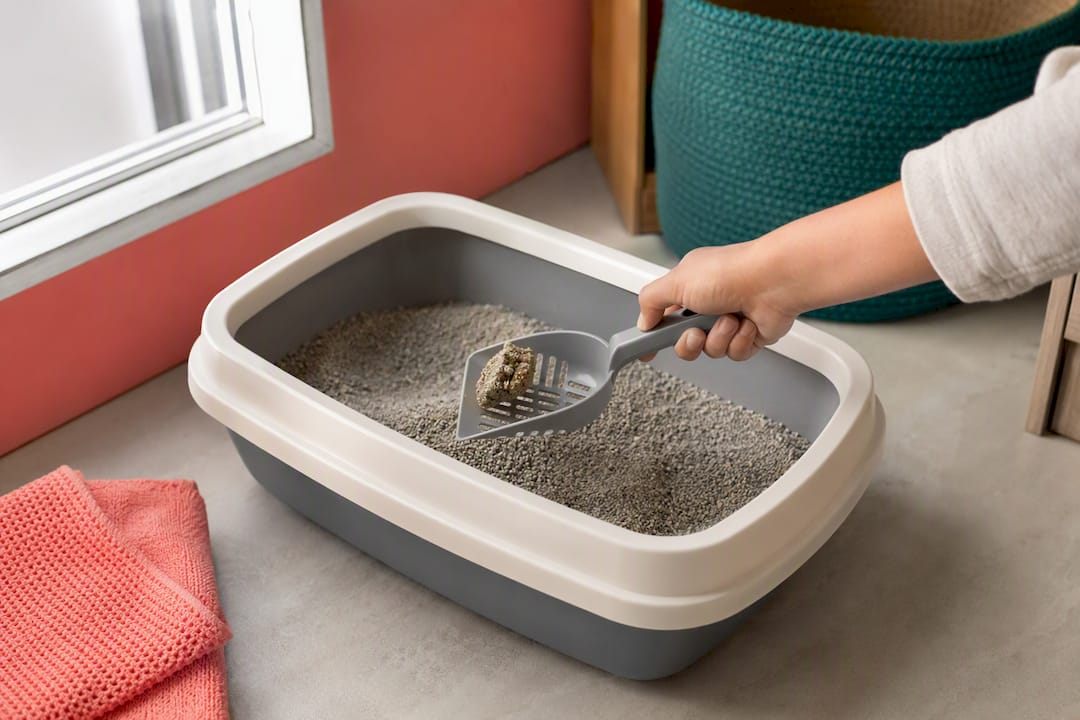
Litter tray hygiene matters just as much as the dose itself. Scooping daily and washing trays regularly cuts environmental reinfestation, and partner guidance on cat litter hygiene practices is worth a read if you’re building out a fuller prevention routine. Worming and flea control work best run side by side too, since fleas are the main route tapeworm larvae use to reinfect your cat.
Giddy Pets’ perspective on getting the schedule right
We think too many owners treat worming as an afterthought squeezed into a vet visit for something else. It deserves its own place in the calendar. Giddy Pets builds its advice around vet-approved guidance and practical tools like accurate weighing and easier administration, because the schedule only works if you can actually stick to it. For anything prescription-only, your vet is always the right call. For the supportive kit around it, we’re glad to help.
— Giddy
How Giddy Pets supports your worming routine
Getting the schedule right is half the job. Getting your cat to actually take the treatment without a fight is the other half, and that’s where the right supplies make a real difference. Giddy Pets stocks the supportive items that make dosing day less stressful for both of you, from grooming tools that help you spot early coat changes to treats that make hiding a tablet far easier than wrestling with a syringe.

Browse the Pet Health & Grooming range for weighing aids and grooming brushes that help you monitor coat condition between treatments, and check out Interactive Cat Toys if your kitten needs distracting during a fiddly dose. For prescription wormers or a tailored risk-based plan, always speak to your vet first. Once you’ve got the green light, head to Giddy Pets’ Pet Health & Grooming shop to stock up on the supportive essentials that keep your worming routine on track.
Sources
- Worming Schedule: Vet-Recommended Timetable by Age
- Worming your cat
- Scheme for individual deworming of cats
- Worms in cats — PDSA