
One Grape Can Be Dangerous: Vet Approved Foods Toxic to Cats in the UK
One Grape Can Be Dangerous: Vet Approved Foods Toxic to Cats in the UK
Chocolate, caffeine, onions, garlic, grapes, raisins, alcohol, xylitol and raw yeast dough are the foods most likely to send a cat into a genuine medical emergency. Some, like chocolate and caffeine, act fast, causing tremors and seizures within hours. Others, particularly onions and garlic, cause damage that builds quietly over days. If your cat has eaten any of these, don’t wait to see what happens. Call your vet or a poison control line straight away.
TL;DR:
- Chocolate and caffeine pose immediate dangers, with darker chocolates and energy drinks causing faster, more severe symptoms in cats.
- Onions, garlic, and related vegetables can cause delayed anemia, often appearing days after ingestion, making prompt veterinary consultation essential.
- Grapes, raisins, and xylitol require urgent attention due to their potential to cause kidney injury or blood sugar issues, even if a small amount is eaten.
- Alcohol, raw yeast dough, and raw meats can lead to poisoning, bloating, or bacterial infections, with quick veterinary intervention improving outcomes.
- Prevention through secure storage, avoiding table scraps, and immediate vet contact after exposure are crucial to reduce risk and ensure cat safety.
Table of Contents
- The definitive list of foods toxic to cats
- How these toxins actually harm your cat
- What to do if your cat has eaten something toxic
- Keeping your kitchen a no-go zone for dangerous foods
- How we checked our facts and Giddy Pets’ vet-approved resources
- A note on responsible feeding
- Safer snacking starts in your kitchen
- Where to go for further guidance
- Sources
The definitive list of foods toxic to cats
Not every food on this list carries the same level of danger, and that distinction matters when you’re deciding whether to watch and wait or grab the car keys. Here’s how the most common culprits break down, roughly in order of how urgently they demand action.
Chocolate. Darker chocolates tend to have higher levels of theobromine and caffeine per gram, and the faster your cat will show signs. Baking and dark chocolate contain far more of these compounds than milk chocolate, which is why a small amount of baker’s chocolate is more hazardous than an equal amount of a chocolate button. Cats are also less likely than dogs to gobble chocolate voluntarily, but curiosity around wrappers and spilled hot chocolate powder still causes cases every year.
Caffeine. Coffee grounds, tea bags, energy drinks and even some pain relief tablets containing caffeine work on the same pathway as chocolate. Methylxanthines in these products can trigger vomiting, tremors, an irregular heartbeat and seizures, often within an hour or two of ingestion.
Onions, garlic, leeks and chives. This is the one owners underestimate most, because the effects rarely show up straight away. Allium vegetables cause oxidative damage to red blood cells, leading to anaemia, and that damage can take days to become obvious. Powdered versions in stock cubes, gravy granules and baby food are just as risky as the raw vegetable, sometimes more so because it’s easy to underestimate how concentrated they are.
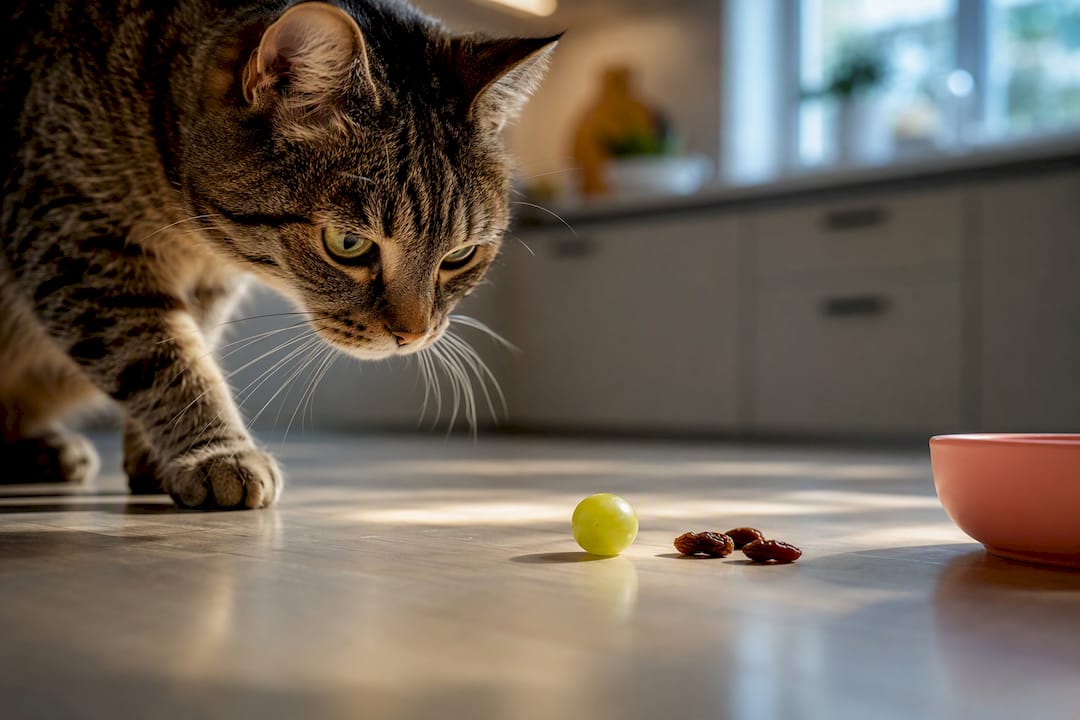
Grapes and raisins. Nobody has fully identified why grapes and raisins are toxic to some cats and dogs while leaving others unaffected, which is exactly why every vet treats any ingestion as a potential emergency. The suspected mechanism is acute kidney injury, and because there’s no safe threshold established, a single grape warrants a phone call, not a wait-and-see approach.
Xylitol. This sugar substitute, found in sugar-free gum, some peanut butters and diabetic sweets, is a well-documented killer in dogs. Confirmed cat cases are rarer, but xylitol is turning up in more household products than ever, and cats are not immune to its effects on blood sugar. Treat any suspected ingestion with the same urgency you would for a dog.
Alcohol and raw yeast dough. Alcohol has a strong depressant effect on cats and even small amounts can be dangerous, a splash of spilled wine or an unattended glass of beer can be enough. Raw yeast dough is arguably worse: it continues fermenting inside a warm stomach, producing ethanol while also expanding and causing painful, dangerous bloating.

Raw meat, raw eggs, raw fish and bones. Vets warn against feeding raw meat, fish and eggs because of the risk of Salmonella and E. coli contamination, and raw egg white contains an enzyme that blocks the absorption of a key B vitamin over time. Cooked bones splinter and can lodge in the throat or perforate the gut; raw bones bring their own choking and blockage risks.
Dairy, fatty trimmings, excess salt and certain nuts. Many adult cats have lactose intolerance, so milk can cause diarrhea but is typically not severely toxic, but it’s still worth skipping. Fatty off-cuts and skin can trigger pancreatitis, a genuinely painful condition. A large salt load causes vomiting and, in extreme cases, tremors from electrolyte imbalance. Macadamia nuts are known to be toxic to dogs and should be avoided for cats as a precaution, since specific feline toxicity data is limited.
Avocado and tomatoes. These sit lower down the risk list. Ripe avocado flesh in small amounts rarely causes more than mild stomach upset in cats, and ripe tomato is generally considered safe, though the green plant, stem and unripe fruit contain solanine and should be kept away. Neither belongs anywhere near the emergency category that chocolate or onions occupy.
How these toxins actually harm your cat
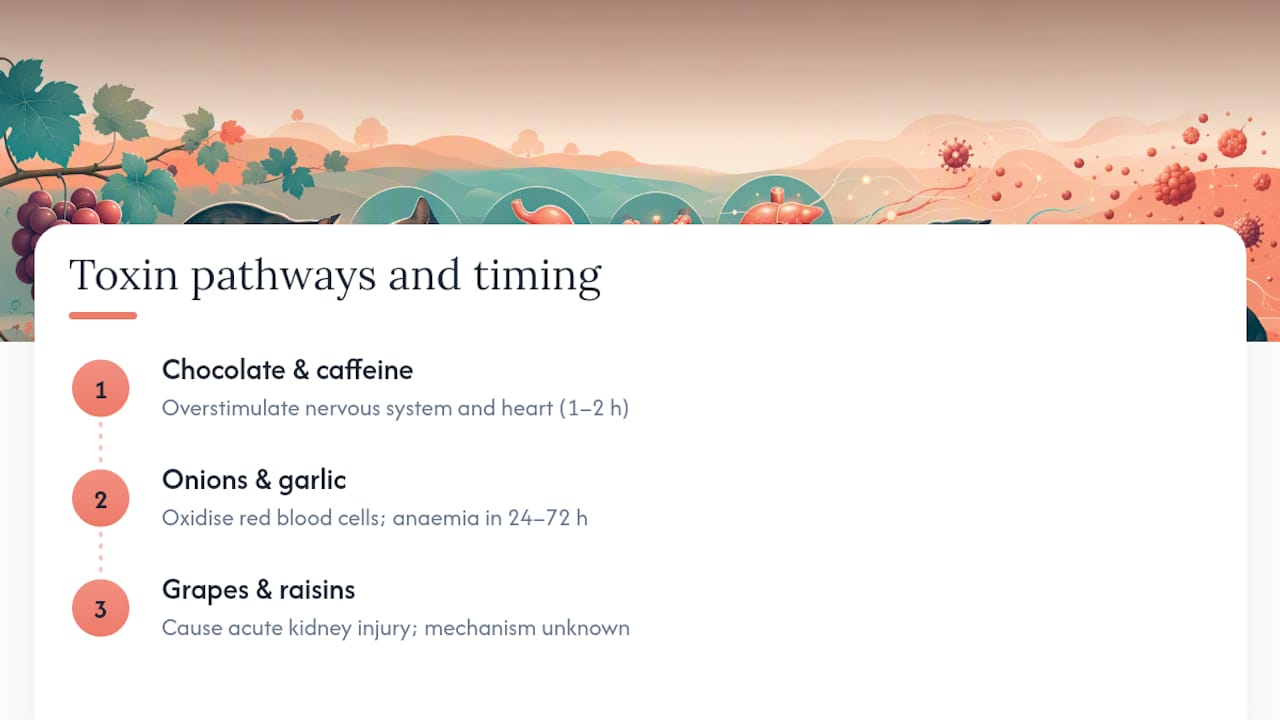
The reason some of these foods are instant emergencies and others sneak up on you comes down to how they work inside the body. Methylxanthines in chocolate and caffeine overstimulate the nervous system and heart directly, which is why signs like vomiting, tremors and a racing pulse can appear within an hour or two of your cat eating them.
Allium vegetables work completely differently. Compounds in onions and garlic convert into oxidising agents once inside the gut and bloodstream, damaging red blood cells in a process that can take between 24 and 72 hours to produce visible anaemia. Grapes and raisins are still something of a mystery scientifically, but the outcome, acute kidney injury, is well documented even if the trigger compound isn’t fully understood.
Watch for two tiers of signs. Immediate red flags include seizures, collapse, laboured breathing, and persistent vomiting that doesn’t stop. Delayed warning signs, more typical of Allium poisoning, include pale or yellowish gums, unusual lethargy, and darker-than-normal urine appearing days after the meal that caused it.
What to do if your cat has eaten something toxic
Speed and calm thinking matter more than panic here. Work through these steps in order.
- Gather the facts. Note what your cat ate, roughly how much, when it happened, and your cat’s weight and age. Photograph packaging if you can, it speeds up the vet’s assessment enormously.
- Don’t make your cat vomit unless a vet has explicitly told you to. Some substances cause more damage coming back up, and cats can inhale vomit into their lungs more easily than people assume.
- Call your vet immediately. Out of hours, ring an emergency clinic or a dedicated poison line such as the Pet Poison Helpline or the ASPCA Animal Poison Control Center, and follow their guidance exactly.
- Expect triage at the clinic. Vets may induce vomiting under controlled conditions, give activated charcoal to bind the toxin, start IV fluids, and run bloodwork to check organ function. Cases involving Allium poisoning or kidney injury often need hospitalisation for monitoring over several days.
Pro Tip: Keep the poison helpline number saved in your phone contacts now, not when you’re standing in the kitchen holding an empty grape punnet. Every minute you spend searching for a number is a minute your cat isn’t getting help.
Vets Now clinical guidance is blunt on this point: don’t take a wait-and-see approach with a known toxin. Supportive care, including hospitalisation and IV fluids, is the standard treatment path once ingestion is confirmed, and starting that care early tends to produce far better outcomes than waiting for symptoms to worsen.
Keeping your kitchen a no-go zone for dangerous foods
Most poisoning cases aren’t the result of a cat breaking into a locked cupboard. They happen because a plate was left on the counter for five minutes, or a bin lid didn’t quite close. Prevention here is mostly about habits, not equipment.
- Store onions, garlic and chocolate in sealed containers inside closed cabinets, not just on an open shelf.
- Use a bin with a secure, ideally foot-pedal or locking, lid rather than an open kitchen bin.
- Never leave plates, wrappers or baking ingredients unattended on a worktop your cat can reach.
- Skip table scraps entirely, even “just this once” habits tend to become permanent ones.
- Discourage counter-surfing with consistent redirection and enough enrichment that your cat isn’t bored enough to go looking.
- Be extra vigilant around Christmas and other baking-heavy occasions, when chocolate, dried fruit and yeast dough are all sitting out at once.
Small physical changes help too. A slow feeder reduces the frantic gulping that sometimes leads cats to snatch food off nearby surfaces, and keeping dry food in an airtight container stops determined cats from working open a crinkly bag themselves.
How we checked our facts and Giddy Pets’ vet-approved resources
Every claim in this guide has been cross-checked against established veterinary sources, including Vets Now, the ASPCA, PetMD and peer-reviewed veterinary literature. This piece was written with vet-reviewed input. For pet-proofing supplies, safe treats and a UK vet finder, explore the wider Giddy Pets library, and always check with your own vet for advice specific to your cat.
A note on responsible feeding
Most poisoning cases we hear about aren’t recklessness, they’re an unattended plate or a well-meaning slice of “just a little” shared with a cat who looked hopeful. That’s forgivable and fixable. What matters more than guilt is speed: if you’re ever unsure whether something your cat ate is dangerous, treat it as though it is and call your vet. Stick to treats made for cats, and keep the risky stuff out of paw’s reach in the first place.
— Giddy
Safer snacking starts in your kitchen
The products that make the biggest difference here aren’t dramatic, they’re the boring, practical ones that quietly remove temptation. Explore pet-proofing and storage solutions designed to keep cupboards and bins genuinely cat-proof, so a curious nose can’t turn a five-minute distraction into an emergency vet visit.

Sealed food containers stop cats getting into gum, wrappers or dried fruit left in a cupboard, while a good slow feeder slows down mealtime enough to reduce the counter-surfing that leads to trouble in the first place. If your cat treats the kitchen worktop as prime real estate, interactive toys can redirect that energy somewhere safer than your fruit bowl. And when you want to reward your cat without any of the risk covered above, browse Giddy Pets’ range of cat-safe treats and food, all chosen with feline safety in mind rather than adapted from a human snack cupboard. Have a look at what fits your kitchen and order what you need before the next dinner party leaves chocolate within paw’s reach.
Where to go for further guidance
For deeper reading beyond this guide, Vets Now’s list of foods cats shouldn’t eat and the ASPCA’s full list of foods to avoid feeding pets are both solid starting points. For the underlying science on Allium and chocolate toxicity, the peer-reviewed review of food-associated poisonings is worth a read, and for allergy-related ingredient questions, City Animal Vet’s guide to cat allergy testing covers related ground.
Sources
- People foods to avoid feeding your pets | ASPCA
- What can cats not eat? 8 common human foods that are poisonous to cats | Vets Now
- Review of food-associated poisonings in small animals (PMC)
- Poisons in cats | PetMD